February 2025
Dr Sepideh Yekani
February 2025
Dr Sepideh Yekani
Hybrid working has rapidly emerged as a defining feature of the modern workplace. Its rise signals a profound shift in the traditional working model, blurring the boundaries between professional and personal life in ways we are only beginning to understand.
It is why Leesman launched The Hybrid Future. A major research project featuring eight distinct campaigns and 3,988 participant employees, it explores the intricacies of this new approach to work from differing perspectives.
The results clearly show that hybrid working has had, and continues to have, significant implications for organisations and the employees within them.
But it is not just reshaping how we work; it is also affecting how we live. Hybrid working holds the potential to reshape key aspects of modern life for the long-term, making the implications for society as a whole arguably just as significant.
Urban economics
Less time spent in the office means less footfall and economic activity in urban areas. City centres, once bustling with a steady and consistent stream of workers, now face economic challenges; the reduction in commuters has affected corporate real estate, retail, dining and other services.
Yet while some central business districts have seen demand ease, suburban and smaller towns have benefitted. Local, often smaller businesses are seeing increased sales as workers who once commuted to central offices five days a week embrace their doorsteps.
Environmental impact
There are ongoing discussions about the impact of remote working on sustainability. With more employees working from multiple locations, energy consumption has increased in homes that once stood empty for much of the working day. However, demands on energy-intensive transport infrastructure and commercial real estate are notably lighter, especially on less popular office days like Mondays and Fridays.
According to the 2024 Corporate Real Estate Leaders report – an annual survey Leesman first ran in 2021 – 67% of respondents plan to reduce their real estate footprint in the next 18 months. With offices downsizing, less commuting and smart energy usage in both homes and traditional workplaces, hybrid working could be a key factor in achieving long-term sustainability goals.
Social dynamics
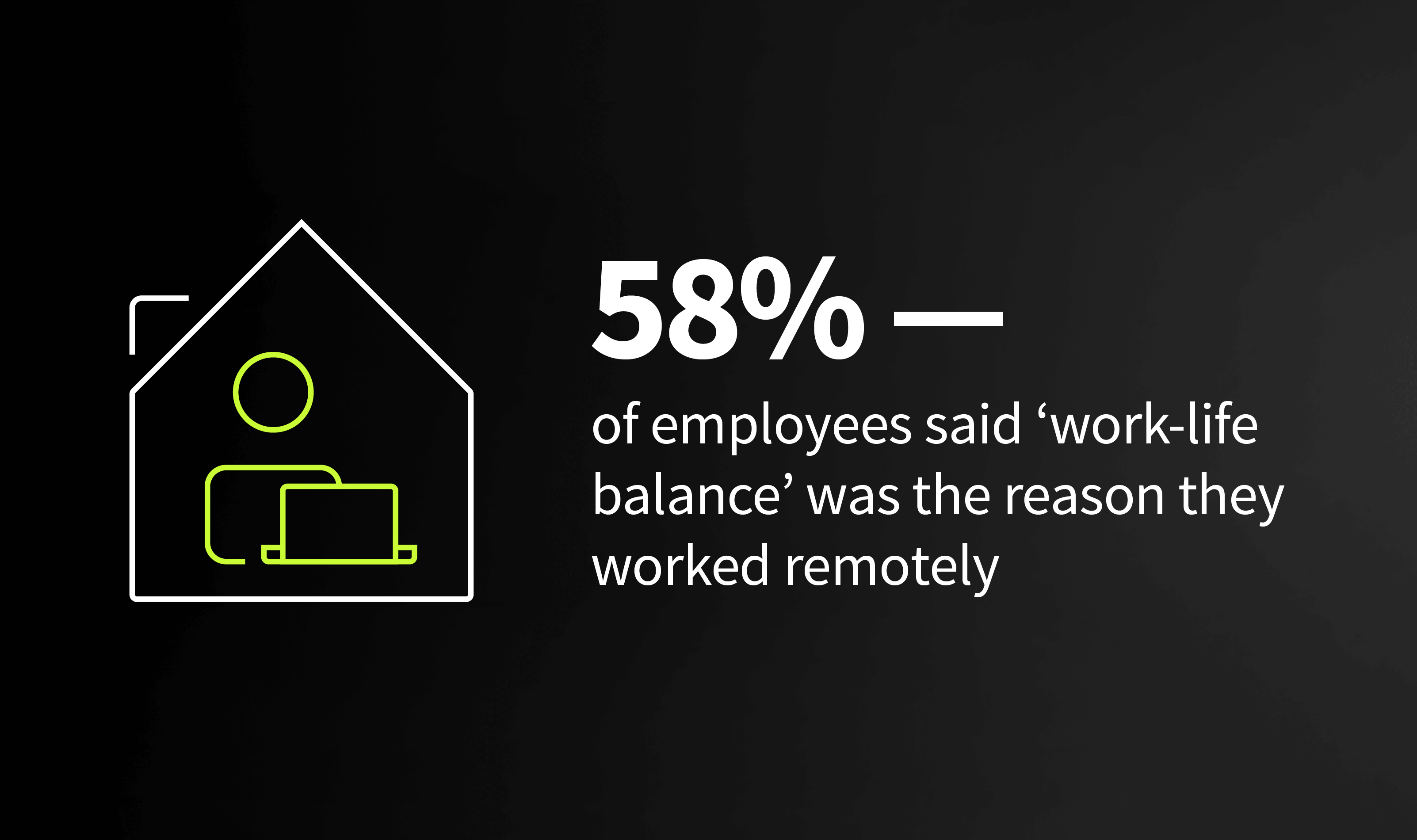
Hybrid working has the potential to reshape social dynamics. More flexibility and less time commuting has vastly improved the work-life balance for many workers. Indeed, work-life balance was the most frequently cited reason for working remotely in THF (59%), while flexibility to manage family responsibilities was the most selected benefit (69%).
Less stress, stronger family bonds and better community engagement all stand on one side of the hybrid working debate. However, while technology enables hybrid working, it can also introduce fresh challenges. Some individuals, for example, may struggle accessing or adapting to new technology, creating a digital divide.
Leesman research shows that preferences for remote working fluctuate depending on age and gender. Younger people tend to prefer sociable offices where they can collaborate with, and learn from, colleagues. In contrast, older, more senior workers – and especially women with caring responsibilities – prefer the peace and flexibility of home working.
Inclusivity
Allowing employees to work from home opens up opportunities for individuals who might otherwise be excluded from traditional office settings, be it because of disabilities, caring responsibilities or lengthy commutes. The needs of existing employees are better accommodated, while employers have a broader talent pool to tap into. But it is not just companies that benefit: reduced barriers to employment enhances productivity and contributes to a more equitable economy.
A word of warning
There is, however, a crucial caveat: for hybrid working to achieve all it can, both within organisations and across society, employees and employers need to work together.
At its best, hybrid working offers the benefits of remote work – autonomy, flexibility and improved work-life balance – while emphasising the importance of the office as a hub for collaboration, community and human connection. No wonder 91% of THF respondents said they like hybrid working.
Yet some companies still want employees to return more fully to the office, convinced – not always unfairly – that it will lead to better productivity, stronger client relations, higher levels of innovation and a more cohesive workplace.
Ultimately, it is in every organisation’s interest to ensure employees are motivated, healthy, satisfied and productive. So it is crucial employers and employees collaborate and work together to find a balanced hybrid working strategy unique to their joint needs and requirements. Because just like wider society, when it comes to the still-evolving world of hybrid working, one thing is clear: there is no ‘one size fits all’.