Skip to Content

Side by side or miles apart

Getting hybrid working right remains one of corporate real estate’s biggest priorities.

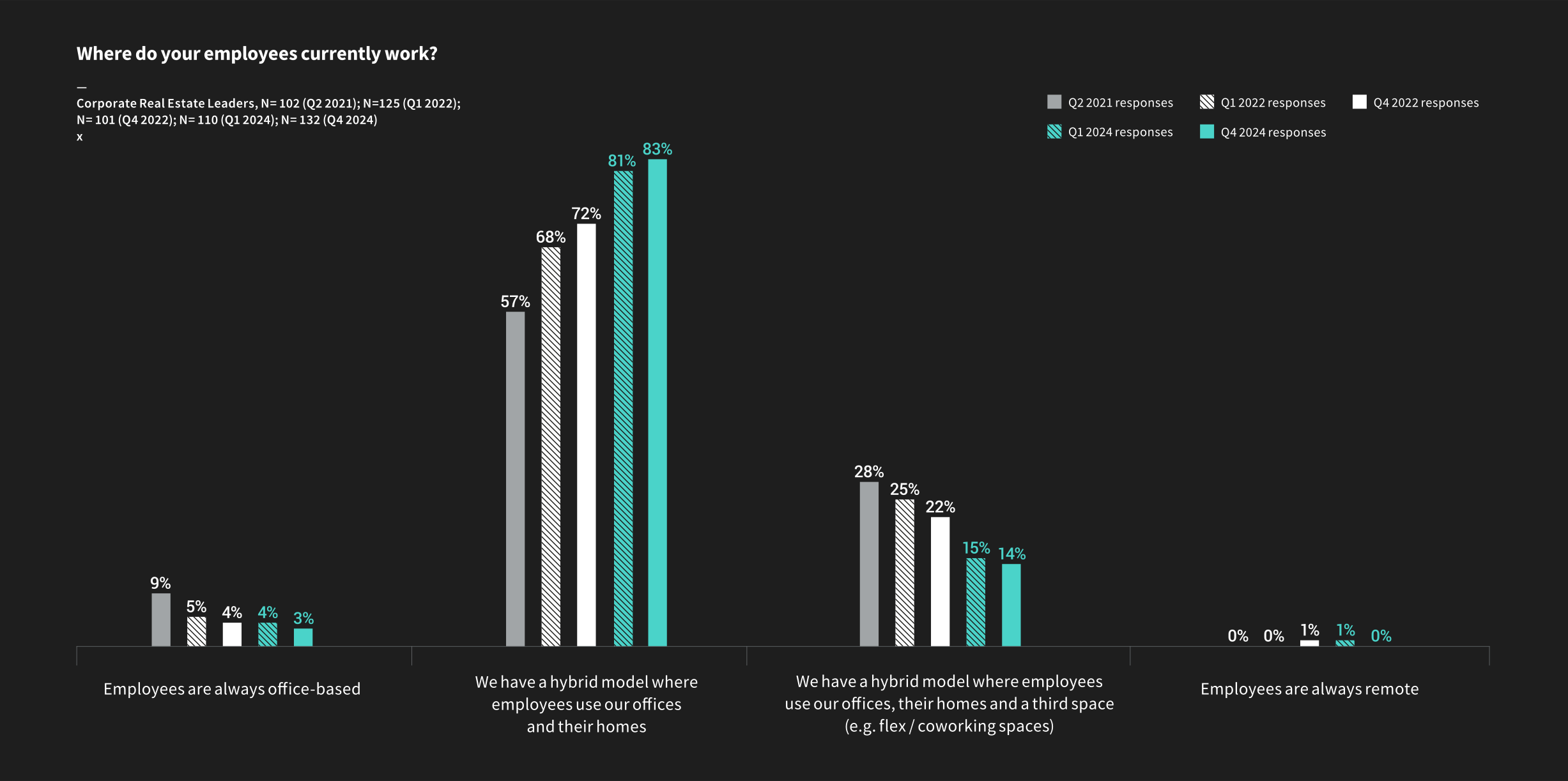
It is not surprising: according to Leesman’s latest Corporate Real Estate (CRE) poll report, Focus Forward: Insights from the top, an overwhelming 97% of senior leaders report that their employees have adopted a hybrid model. It is the highest rate of hybrid working reported by leaders since the beginning of the CRE survey.

The poll’s findings tallied with Leesman’s wider research. Of all respondents to the standardised Leesman Workplace Experience Assessment post-pandemic, 88% work in a hybrid way. While that leaves 12% who do not, hybrid still pervades workplace dynamics; whether people work entirely remotely or are exclusively office-based, they will inevitably have colleagues who work in a hybrid way.

Most organisations have therefore now introduced a range of hybrid policies and options, to the benefit of both company and employees. What is changing, however, is the level of flexibility given.

In most organisations, hybrid now means a combination of working in the office and at home, and not at multiple locations. People working solely from the office and home has increased to 83% from 57% since Leesman’s first CRE poll in 2021. Our data also suggests that the proportion of organisations that give their employees full choice over where to work has halved since the beginning of 2022.

In other words, hybrid working is becoming more structured.

In the most recent CRE poll, 57% of respondents stated that decisions about the number of days employees spend in the office are made at an organisation-wide level, an increase from 33% at the beginning of 2022.

The reasons for companies adopting a more structured approach to hybrid working vary, but most are aimed at better understanding and predicting employee office attendance patterns. One senior CRE leader said that it was important to match spend against occupancy, to maximise efficiency, but also to drive attendance by ensuring the right balance of settings, features and functionality in the workplace.

Other organisations aim to prevent empty office days by ensuring office attendance is distributed equally across all weekdays.

However, while hybrid is becoming more structured, it does not mean a full-scale return to office (RTO) is looming for knowledge workers – regardless of what some media reports might insist.

Indeed, Leesman data provides a stark contrast to the more lurid headlines. A mere 4% of the CRE leaders who have an organisation-wide mandate in place expect their employees to be in the office five days a week. And when assessing employee behaviour through our post-pandemic workplace experience data, we find that only 8% of respondents report being in the office full-time.

Instead, three days in-office remains the norm, as reported by 48% of the CRE poll respondents. This pattern perhaps reflects employers’ efforts to find a solution that supports organisational objectives while still fulfilling employee expectations.

Or, as one leader put it, the priority is finding a balance between productivity and employee engagement.

It is also important to note that office attendance is not always determined as a fixed number of days per week. When asked about the expected frequency of office attendance, 21% of CRE leaders did not choose a specific number of days but instead shared the alternative approaches they have implemented. These range from 2.5 days per week to 40% flexibly across the calendar month, as well as allowing for role-by-role variances, indicating a tailored approach to hybrid working configurations is still possible.

Another noteworthy aspect is the flexibility in how these policies are interpreted, sometimes even within the same organisation. For instance, one respondent explained:

“We say that the office is the primary workplace, from which the majority of the work should be performed. Most managers and employees interpret that as a minimum of three days per week, but it’s very flexible and might well mean three weeks in the office, followed by one week working from your summer house, as long as it is in the same country.”

Though hybrid working is now the norm, the strategies surrounding it are still catching up.

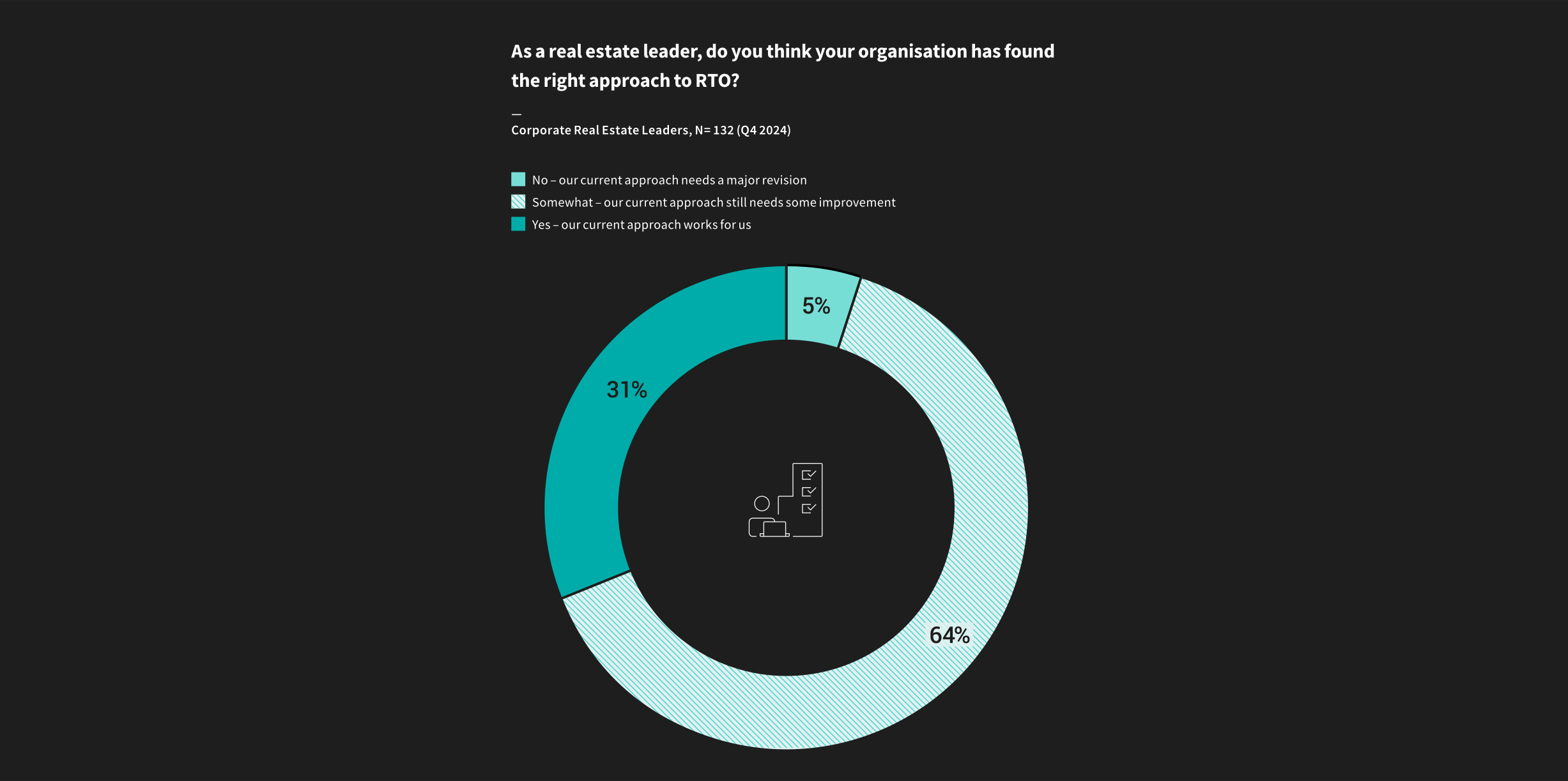
When asked whether they think their organisation has found the right approach to RTO, only 31% said ‘yes’. The majority (64%) feel that their RTO approach needs further improvements; the remainder believe their approach needs major revision. No wonder getting hybrid right remains for so many as a core priority for 2025.

What is clear, however, is that there is no RTO or hybrid working model that works for all.

It is therefore vital that, when RTO strategies are drawn up, they are customised to an organisation’s unique needs, take employee requirements and experience into consideration, and avoid blanket solutions. Basing policies on detailed data is one of the most effective ways to navigate the hybrid era and enhance employee experience – wherever they may be based.


Get your copy

By combining exclusive poll results with our workplace experience data, our latest report gives a comprehensive view of the evolving landscape, helping leaders navigate the challenges and opportunities ahead.

Download PDF