December 2023
The Research & Insights Unit
December 2023
The Research & Insights Unit
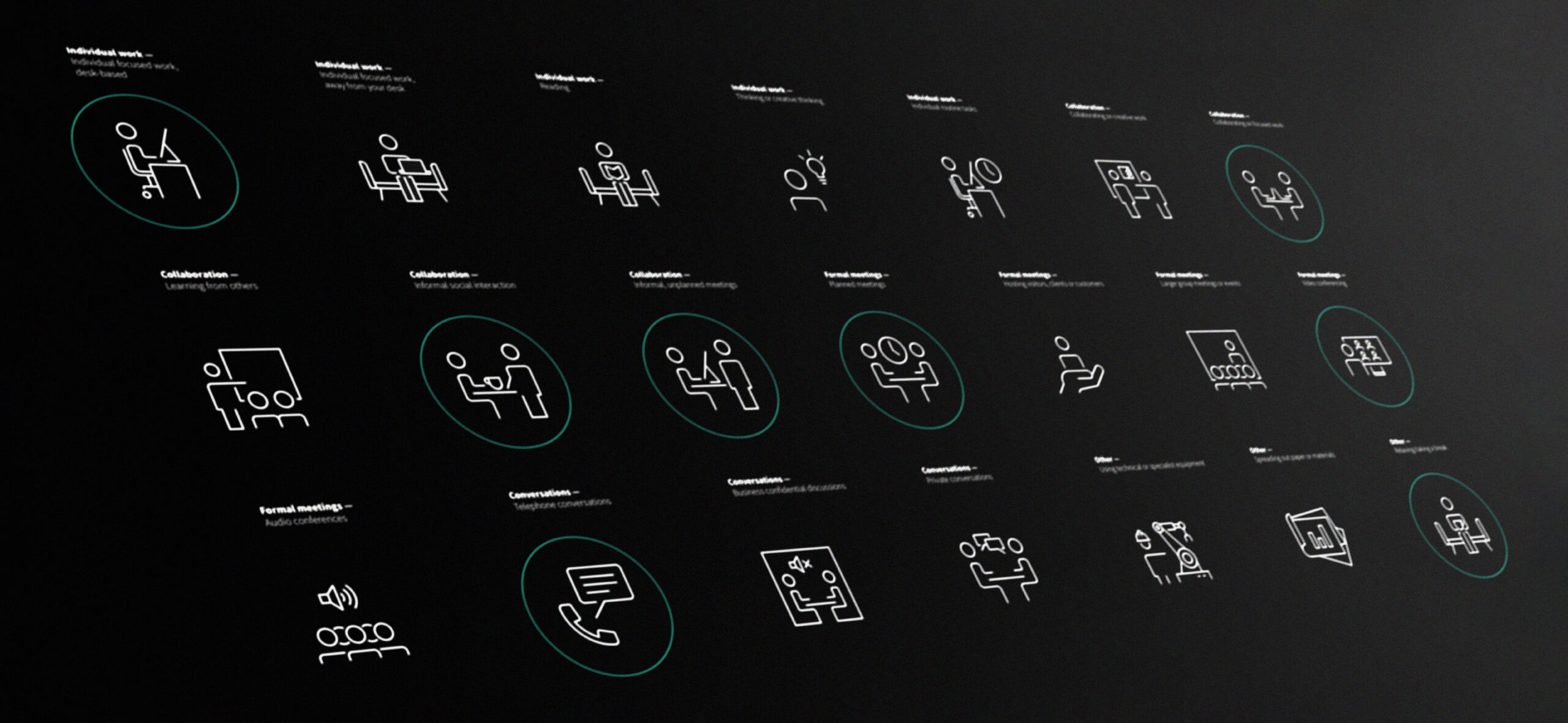
Our research has allowed us to identify the most statistically common functional requirements of the post-pandemic workplace. Eight out of our 21 Workplace Experience Assessment standard activities will typically register as important by the majority of respondents (> 49%). These activities are likely to be fundamentally important in most workplaces, and must be supported if the space is to meet employees’ needs.
Our data also shows that when an activity is brilliantly supported, it can directly influence the number of employees who attach importance to that activity. Employers can use this to their advantage in any strategy that seeks to magnetise rather than mandate employees back to the office.
It is equally important though to acknowledge that these activities will vary between sector, organisation and individual departments. So each organisation must establish its own workplace function hygiene factors.
Individual focused work, desk-based
Statistically, this is the bedrock of the workplace, important to 92% of respondents. This is quiet, solo, concentrated work, and is crucial to a positive sense of personal productivity. It will include a myriad of typical knowledge worker duties and sits at the heart of almost all knowledge economy work. Workplaces that fail to support ‘Individual focused work, desk-based’ are failing the basic processing of information, problem solving and the incubation of ideas.
Planned meetings
The second most important function, cited by 75% of respondents as a key work activity. ‘Planned meetings’ may or may not be creative in nature, but they are scheduled events that employees know about in advance and involve others. They became increasingly more important throughout the pandemic as a result of distributed working. ‘Planned meetings’ enable collaboration through the sharing and dissemination of knowledge.
Telephone conversations
Important to 58% of employees, this activity is more important in some industries than others, such as engineering or banking, where quick ‘yes or no’ answers are required. But in almost all sectors, it is progressively reducing in importance as we move to video-first communication. ‘Telephone conversations’ enable and strengthen collaboration and creativity but are primarily perceived to support personal and collective productivity.
Collaborating on focused work
‘Collaborating on focused work’ ranks fourth by volume of importance, with 56% of respondents saying it is a key work activity for them. As a function, it is not bound to a specific environment, but it does require fewer distractions and benefits from privacy. Increasingly it may involve others who are remote, so is as likely to be digital as face-to-face or hybrid. ‘Collaborating on focused work’ generates ideas, solves problems and reinforces creativity.
Informal, unplanned meetings
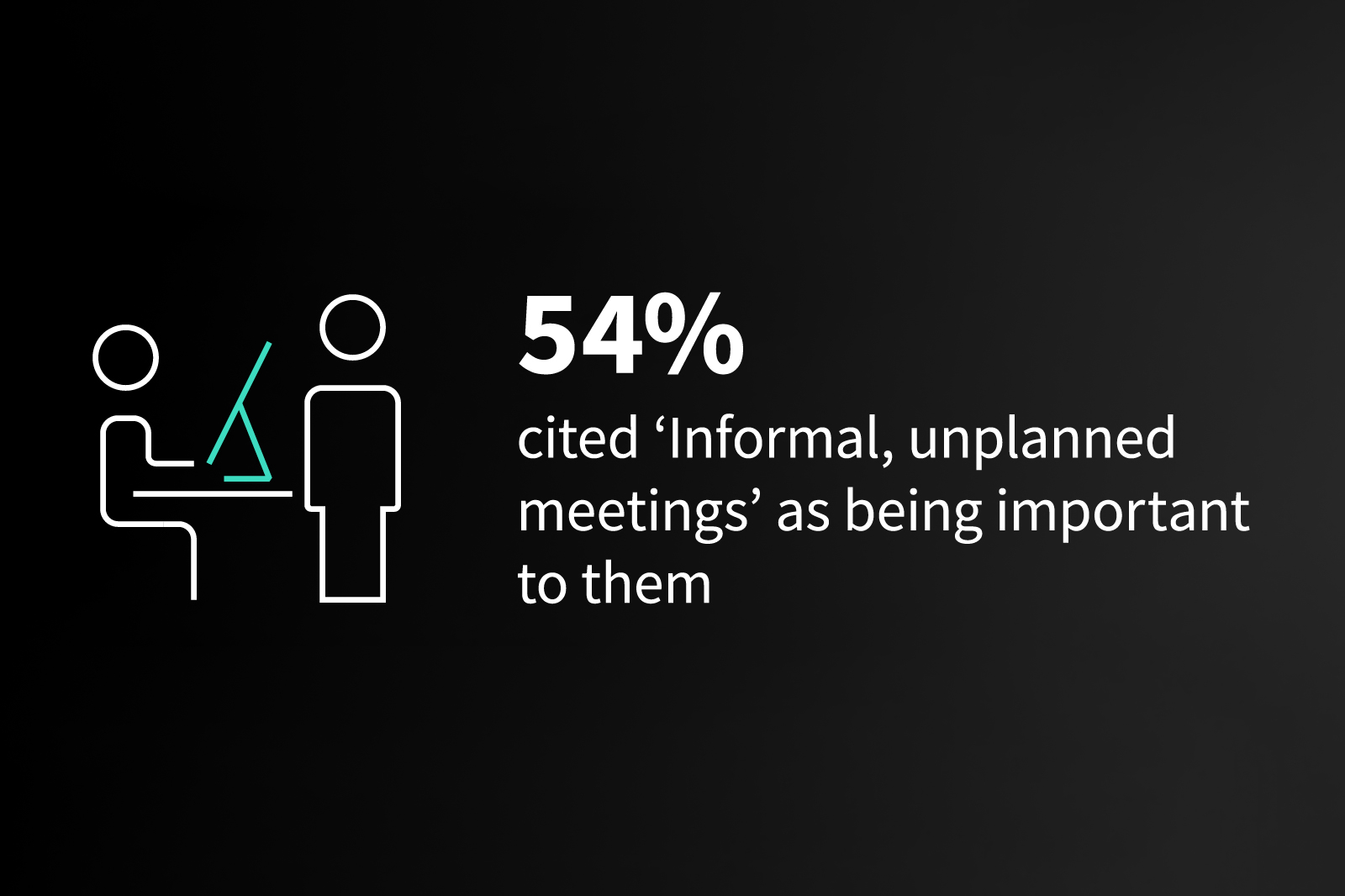
These are spontaneous opportunities to share information and knowledge, thereby bolstering collaboration on a less formal basis. A total of 54% of respondents see it as an important part of their work. In offices, these meetings require space away from the desk, most likely in an acoustically-enclosed location, but equally could be an impromptu video call at the request of a remote colleague.
Video conferencing
Unsurprisingly, ‘Video conferencing’ increased in importance through the pandemic. Now at 50% importance, organisations should be aware that this is still climbing steadily. Its purpose is clear: collaboration and connection. For a great experience, employees are likely to require privacy, especially given most have been used to the acoustic privacy of their homes. The impromptu nature of some calls offers a significant challenge to those working in open-plan offices, both for the person on the call and for potential disturbance to those nearby.
Relaxing/taking a break
Important to 50% of respondents, ‘Relaxing/taking a break’ now has a statistically higher importance than in the years preceding the pandemic. The specific reasons for this are not self-evident, but perhaps suggests that employees visiting the office are attaching an increased value to social time with their colleagues since working from home more. Like ‘Informal social interactions’, ‘Relaxing/taking a break’ aids social cohesion, cultural alignment and instils a sense of Pride & enjoyment.
Informal social interaction
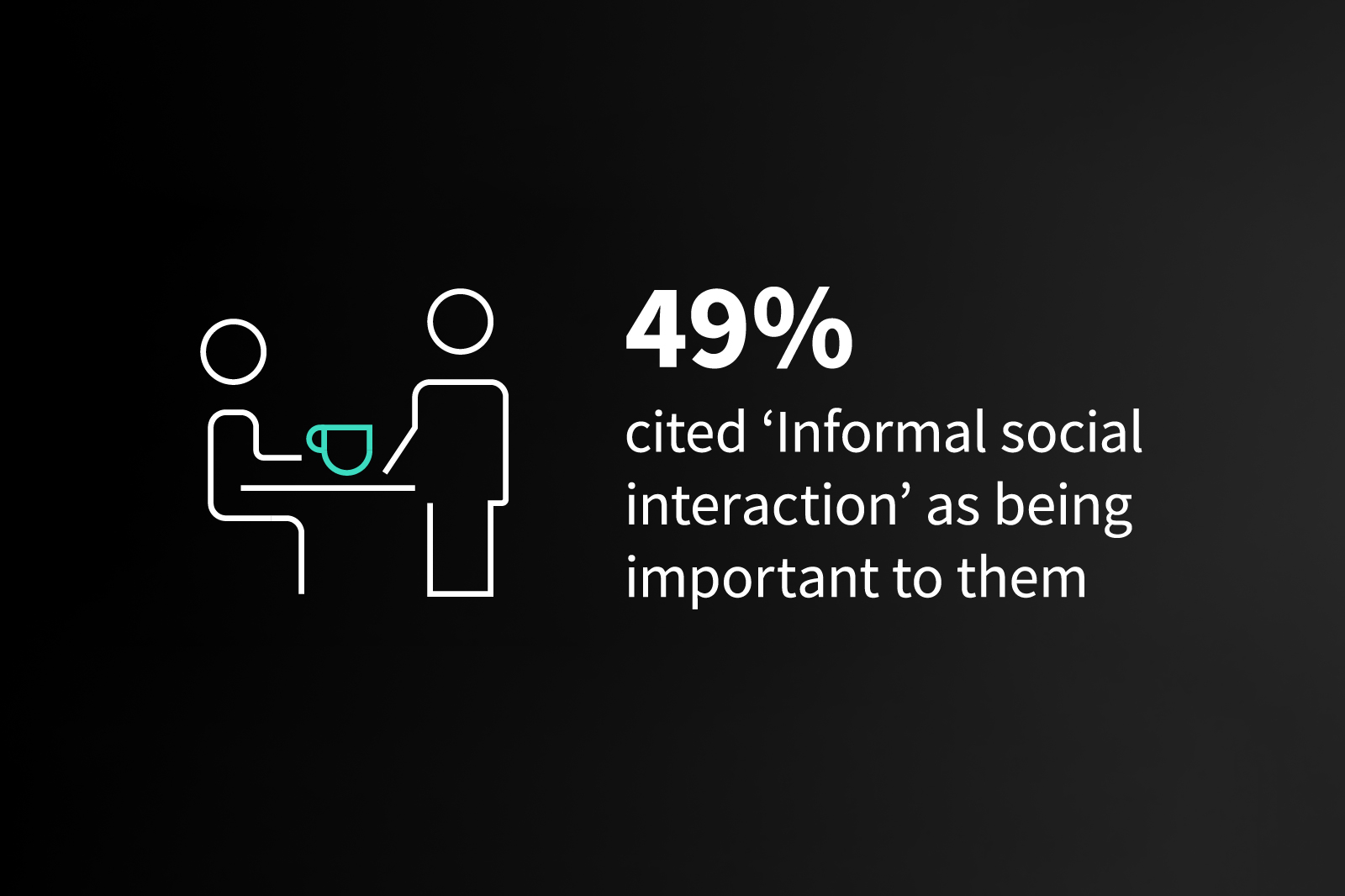
‘Informal social interaction’ is important to 49% of respondents. Its primary outcomes are building social ties, trust, camaraderie, friendship and community. These interactions can be intentional, even if they are unplanned, and help boost wellbeing, humanise the workplace and break down corporate barriers. As such, they play an important part in employees’ mental and physical wellbeing. Employers are increasingly creating facilitated social events to encourage employees to come to offices.