

Date
July 2024
Author
Madalina Hanc, PhD
Share
July 2024
Madalina Hanc, PhD


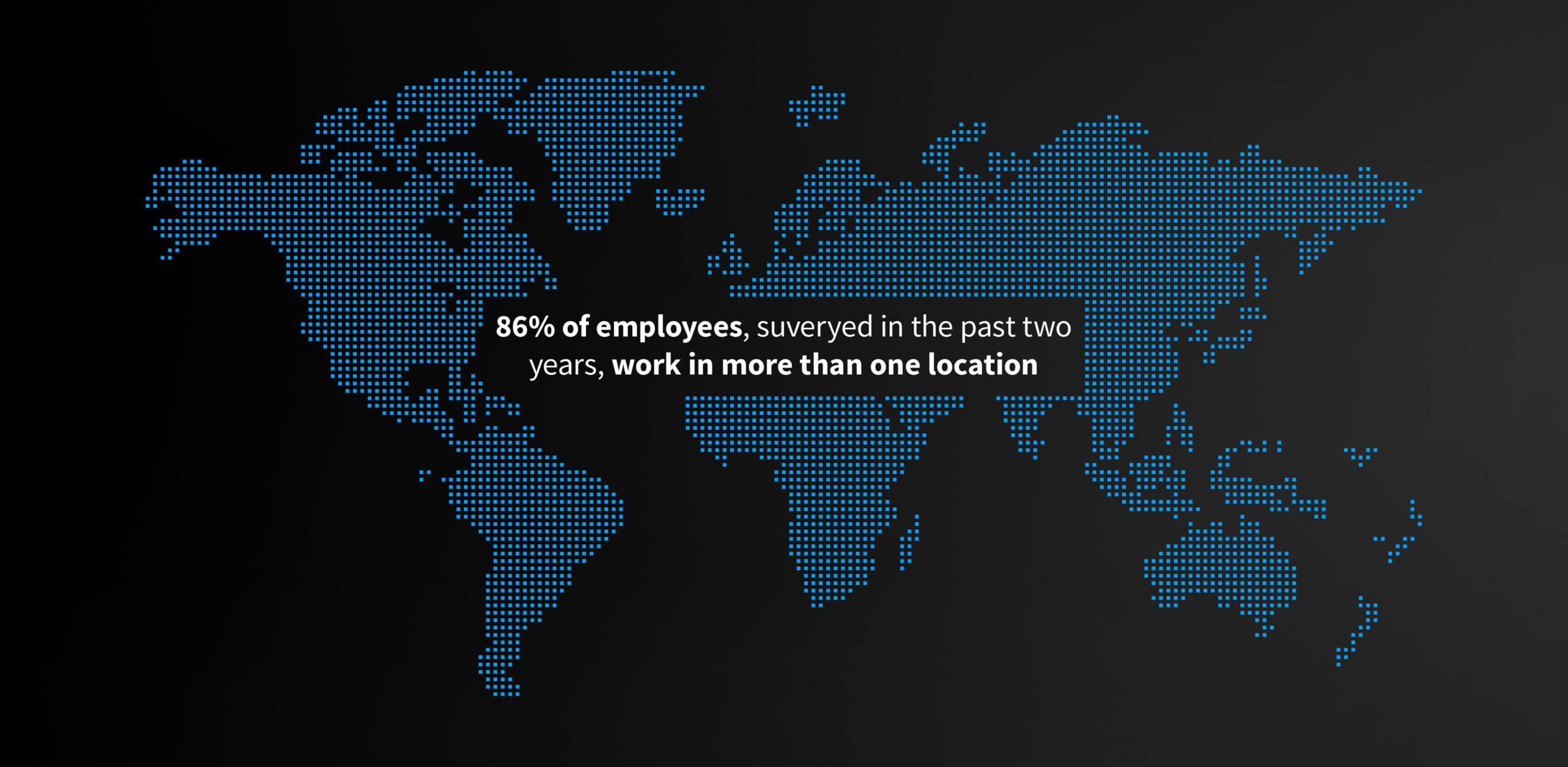
The data is increasingly clear: hybrid working isn’t going anywhere. Across more than 305,000 employees surveyed by Leesman globally in the past two years, 86% stated they work in more than one location. Over the same timeframe, just 9% worked only in the office, and a mere 5% were fully remote (Figure 1).
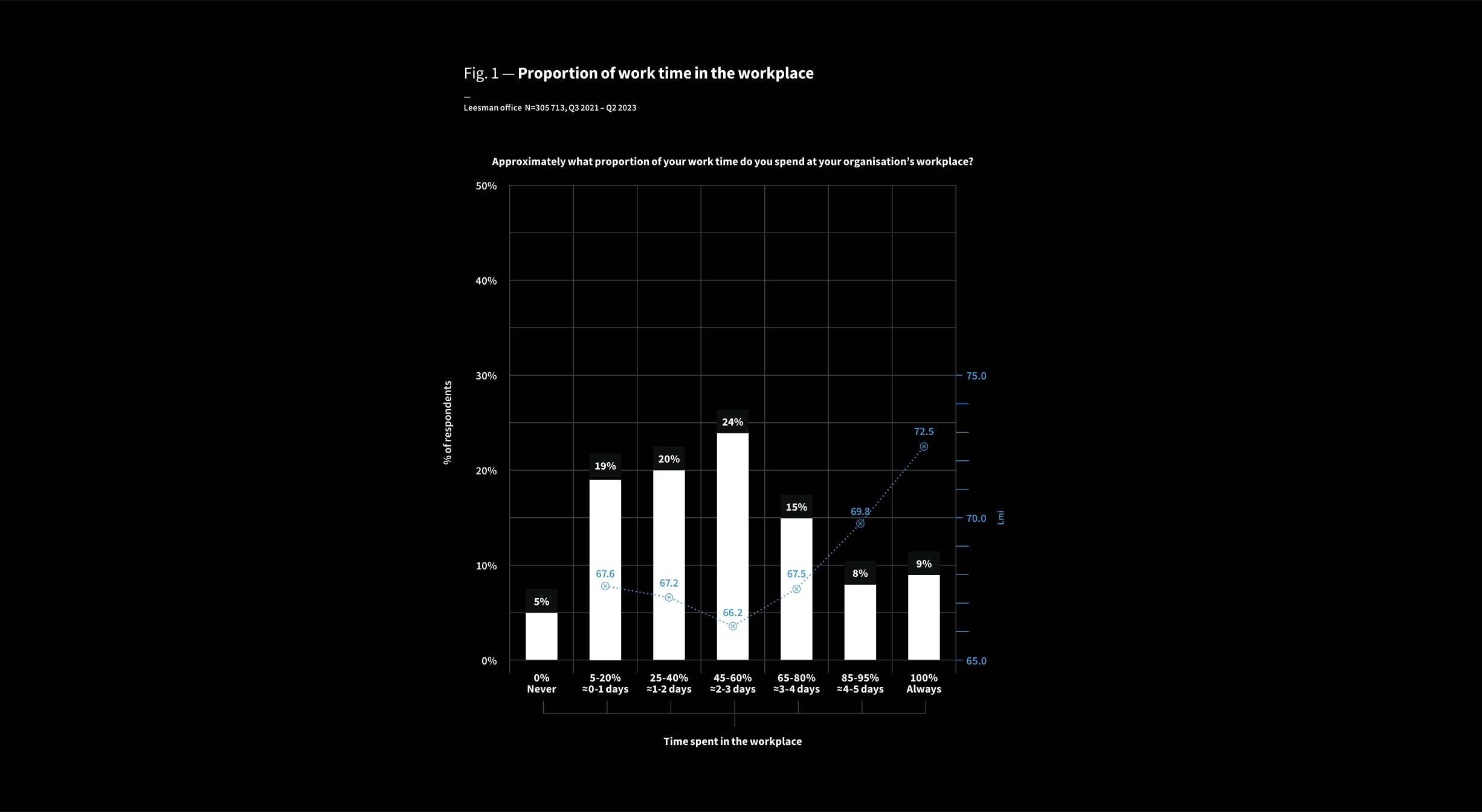
But the hybrid spectrum is extremely diverse in terms of work styles and office utilisation patterns. The largest share of employees – almost one in four (24%) – may have developed a consistent pattern of using the office between 2 and 3 days per week, but for some, ‘hybrid working’ means doing most of the work in the office with a few things done remotely, while for others, it’s the reverse.
However, it’s also clear that the office continues to be an integral part of most hybrid models: 95% of employees used an office for some proportion of their work time, be that a day or four and a half days a week. So then, the key question is: how well does the workplace meet the different demands and needs of a hybrid workforce?
Encouragingly, organisations across the globe are actively making efforts to improve office experience. Perhaps this is why the average workplace experience, as measured through the Leesman Index (Lmi) score, has increased by nearly four points from 64.3 pre-pandemic to 67.9 post-pandemic1. But even so, it’s still quite far from the experience that employees have when working from home: the average Home Leesman Index (H-Lmi) score is 77.8, nearly ten points more. So, the average home continues to support the average knowledge worker better than the average workplace does.
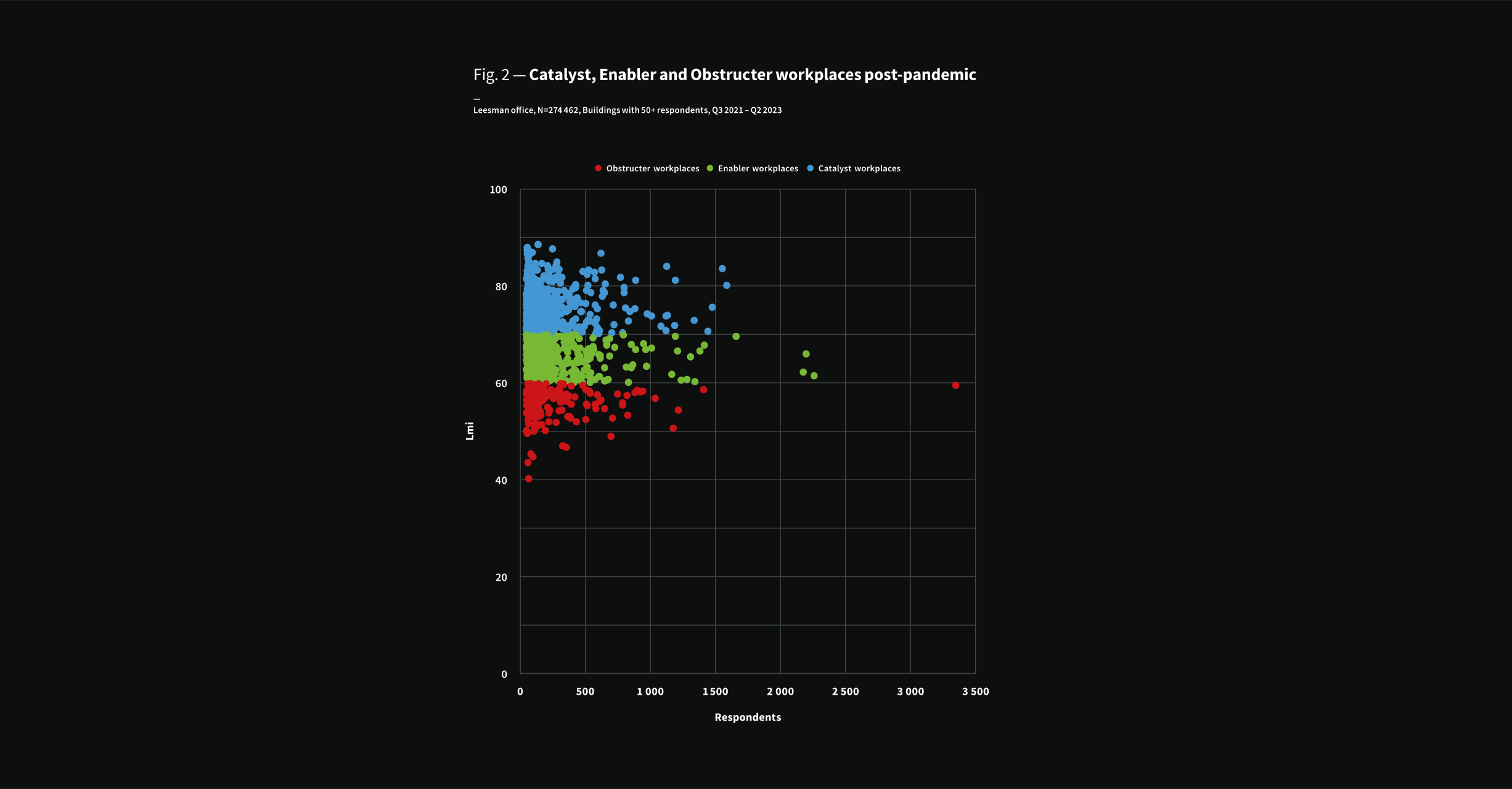
Even though workplaces are getting better on average, when looking at those we’ve measured post-pandemic we see that sadly, some are still far from outstanding (Figure 2). While more than two out of five (42%) have an Lmi of 70.0 or above and act as ‘Catalysts’ for employee experience, satisfaction and productivity, the majority still fail to deliver a positive impact. In fact, 16% are ‘Obstructer’ workplaces that offer a poor experience (Lmi below 60.0) and actively hinder employees’ ability to be at their best. The remaining 42% are merely ‘Enablers’ offering an average experience (Lmi between 60.0-69.9) that miss the potential to significantly enhance employee experience and organisational outcomes.
Many organisations continue to be challenged with enticing employees to spend more time in the office than they currently do and return to office (RTO) is still a core topic of discussion in the world of workplace. But our data shows that the average workplace doesn’t quite support the new ways in which people are working (Figure 1). Those who spend most of their work time in the office may have a great experience, but those with the most common hybrid working pattern – 2-3 days in the office – have the poorest experience (Lmi 66.2). So, it’s clear that having an average-quality workplace isn’t enough anymore.
Perhaps the focus should shift from increasing attendance to raising the bar for workplace quality. Building an outstanding workplace experience for everyone – however often they visit the office – is crucial to making hybrid working a success.
But what value does an outstanding workplace bring, in this new hybrid world, and how do you make the jump from a ‘good’ workplace to a ‘great’ one?
Power of Place
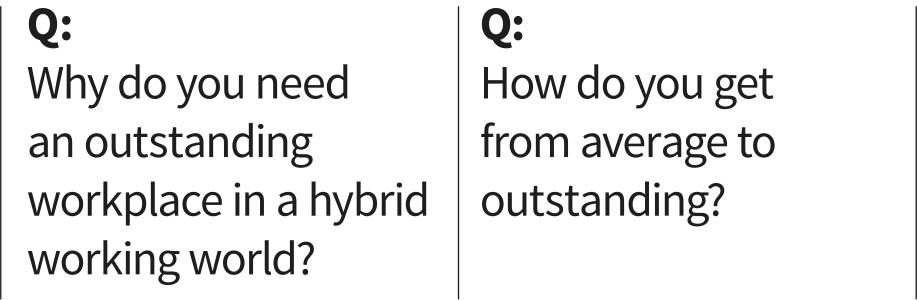
Based on an extensive collection of post-pandemic employee workplace experience data, we conducted the Power of Place research to explore two questions:
To highlight the differences between average and outstanding we specifically compare the Enabler workplaces to a subset of 53 workplaces from the Catalyst group2 which had achieved Leesman+ certification – the standard of excellence for employee workplace experience. Leesman+ is only awarded to high-performing workplaces that deliver great employee experience and meet rigorous criteria including a high response rate and low margin of error3.
In this article, we delve deeper into the first question.
Why do you need an outstanding workplace?
As the new default, employees no longer go to the office for the majority of their work time, and only a small proportion of employees work exclusively in their office. So why should your organisation invest in its workplaces and make them outstanding?
In a hybrid world, the workplace is still a fundamental component, but it now needs to respond to the new way people are using it. The best workplaces we’ve measured post-pandemic provide a seamless hybrid working experience for all users and enable them to be at their best. Based on this data, we’ve identified the four key areas where having a great workplace (as opposed to just an ‘average’ one) brings critical organisational benefits:
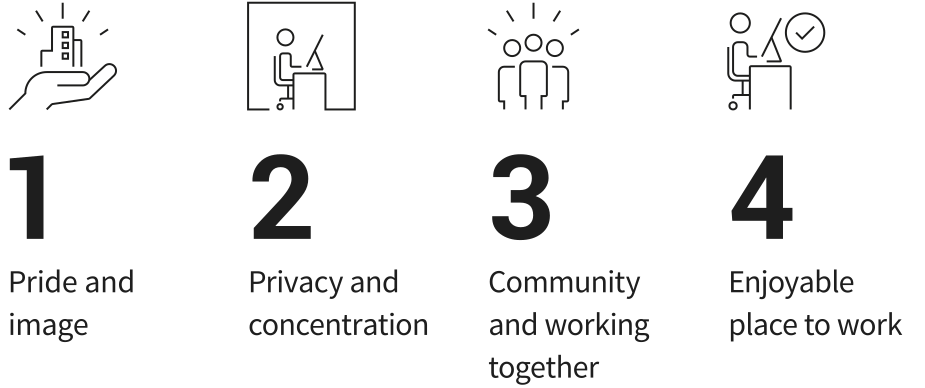
These benefits enable your workplaces to help you navigate the hybrid uncertainties and propel you towards organisational success.
Pride and image
Hybrid working brings flexibility but can also be a serious threat to shared organisational identity, as people spend less time there and together. Now, the workplace needs to work even harder to create a lasting positive impression on employees and visitors. This is where pride and corporate image are crucial, and our analysis found they are some of the biggest advantages that a great workplace brings.
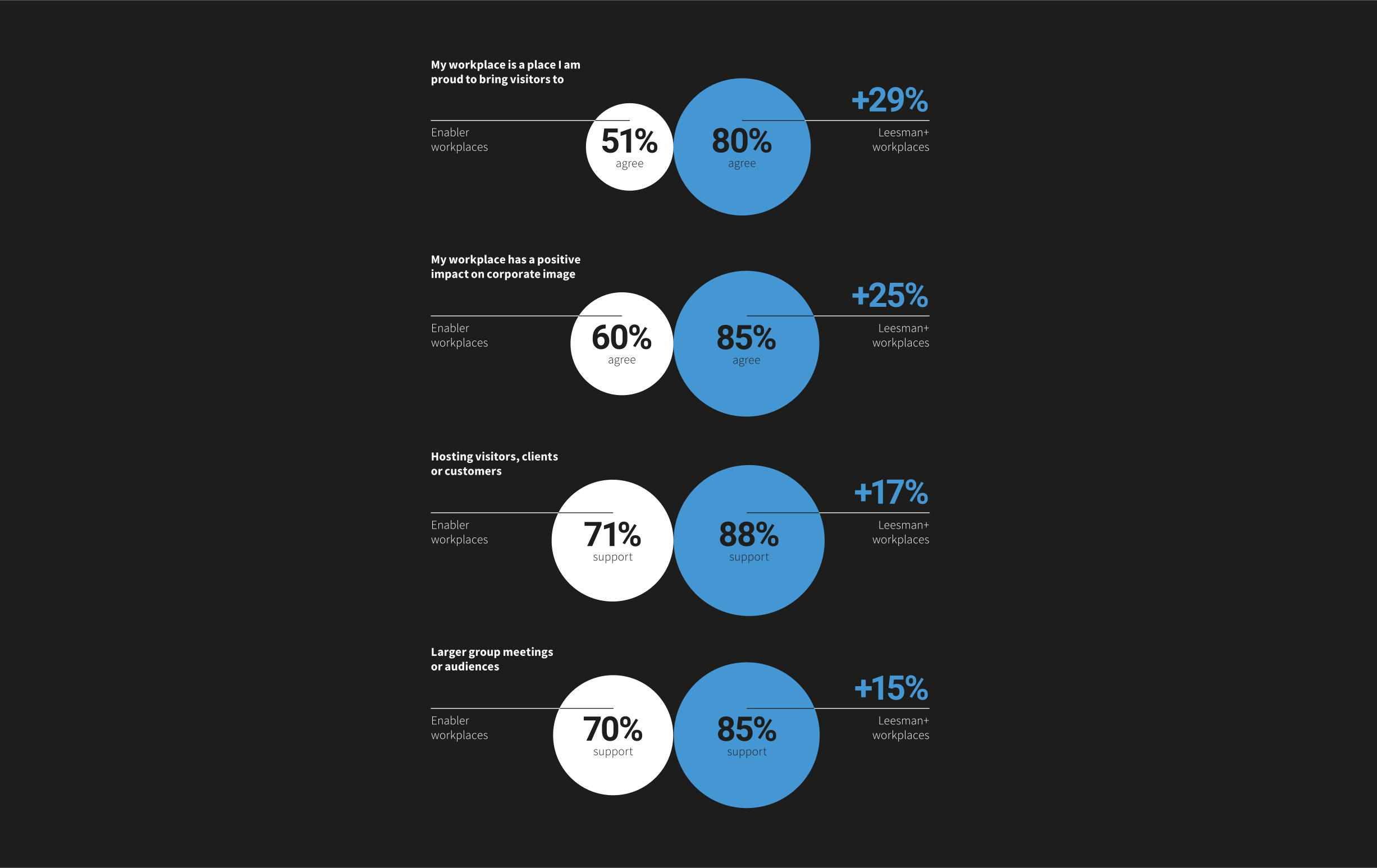
In Leesman+ workplaces, 80% of employees are proud to bring visitors there, 29 points more than across the average Enabler workplaces (51%). Employees working in a great workplace also overwhelmingly agree it has a positive impact on corporate image (85% vs 60% in Enablers). But why does that matter?
The most obvious benefits of pride and image relate to their positive effect on public-facing interactions: activities like ‘Hosting visitors, clients and customers’ and ‘Larger group meetings or audiences’ – are both much better supported across the Leesman+ workplaces (the scores are higher by 17, and 15 points, respectively). But pride is also a lasting sentiment that stays with employees even when they’re not there and may help strengthen a sense of common organisational identity.
Privacy and concentration
One of the things home working does brilliantly – as opposed to the average office – is provide a quiet environment that favours privacy and concentration, the key requirements of productive work. As a result, many employees working in a hybrid way are gravitating towards their homes for tasks that require focus and quiet time. In fact, a common problem of hybrid working is that employees are forced to plan their schedule around the conflicting demands of ‘me’ and ‘we’ activities, but this causes friction as it’s difficult to have one without the other.
But in an outstanding workplace, employees don’t have to choose, because both types of requirements are catered for. The implications on productivity are striking: 80% of the employees working in Leesman+ workplaces thought their workplace enabled them to work productively, compared to 65% in the Enablers.
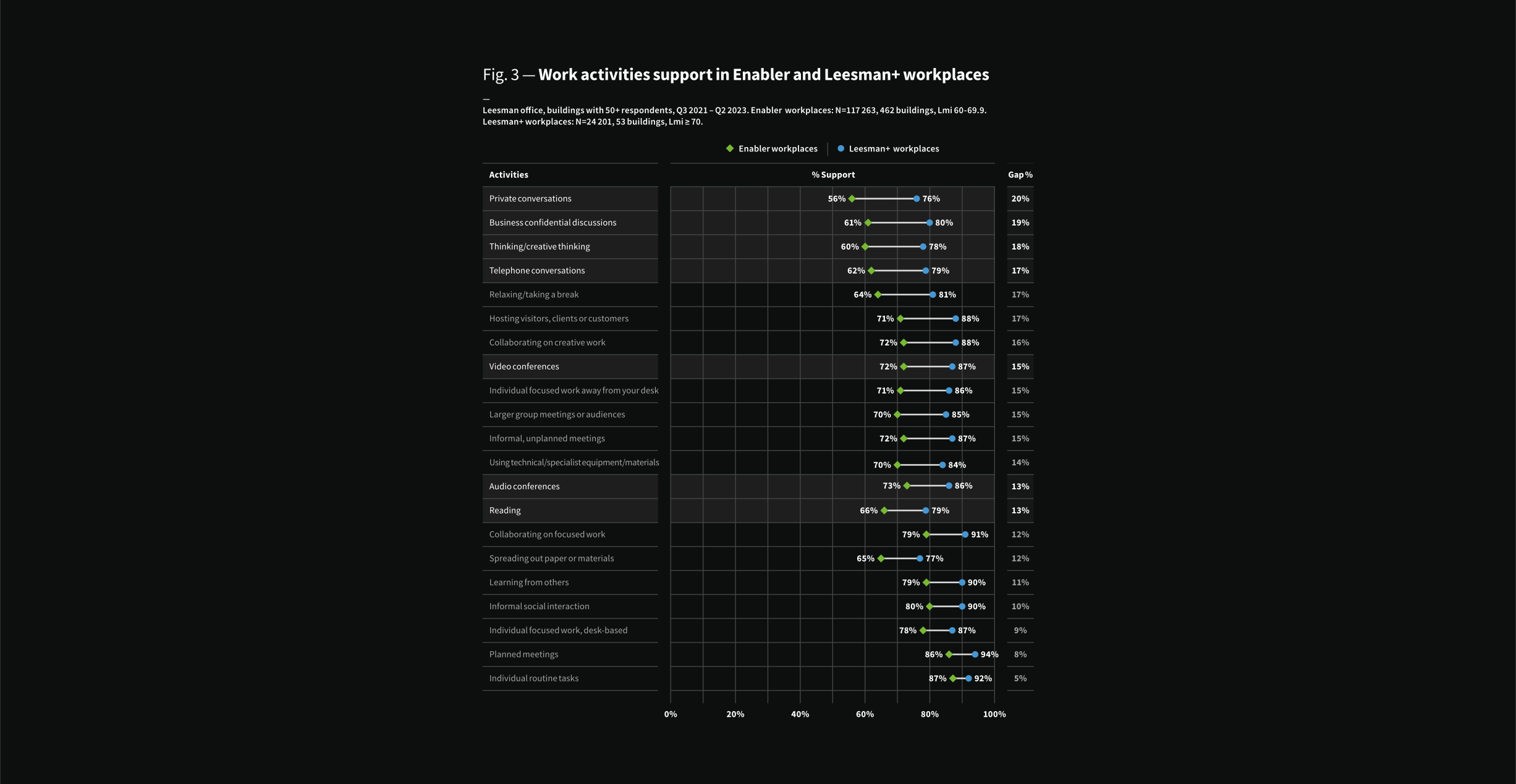
When looking at how well work activities are supported across the Leesman+ and Enabler workplaces, the biggest four differences refer to activities demanding privacy and/or concentration (Figure 3). ‘Private conversations’, ‘Business confidential discussions’, ‘Thinking/creative thinking’, and ‘Telephone conversations’ are all much better supported in Leesman+, with scores between 17-20 points higher.
Community and working together
Fostering an inclusive sense of community for all employees is vital for a cohesive and connected workforce, but in a hybrid working model with employees working from different locations, work is often asynchronous, collaboration is challenged, and people can feel isolated. Therefore, the workplace has an even bigger role in ensuring working together is supported in all the ways it is currently done – in person, remotely, or a mix of the two.
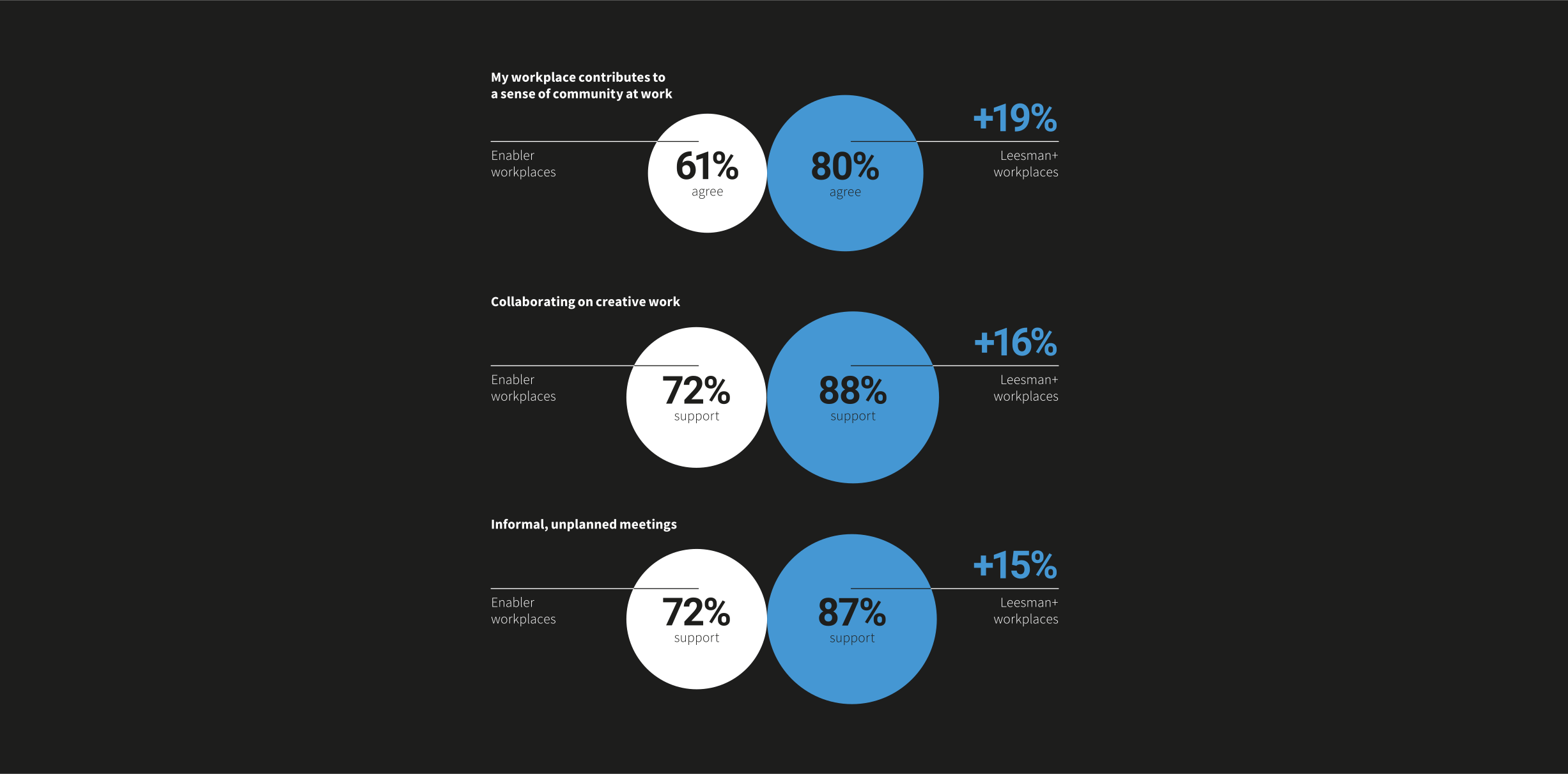
The data shows that a great workplace delivers on this complex need. In the Leesman+ workplaces, eight out of ten (80%) employees agreed their workplace contributes to a sense of community at work, 19 points more than across Enabler workplaces (61%).
Social and collaborative activities that enhance this feeling – for example ‘Collaborating on creative work’ and ‘Informal unplanned meetings’ – are also excellently facilitated in Leesman+ workplaces, with nearly nine out of 10 employees saying they are supported.
Enjoyable place to work
Hybrid working emphasises employees’ choice over which location to work from, and in many ways enables them to vote with their feet. To some extent, the office now competes against the most familiar and comfortable place there is – home. All this means that workplaces need to not just be functional places of work, but also enjoyable environments that people are genuinely attracted to.
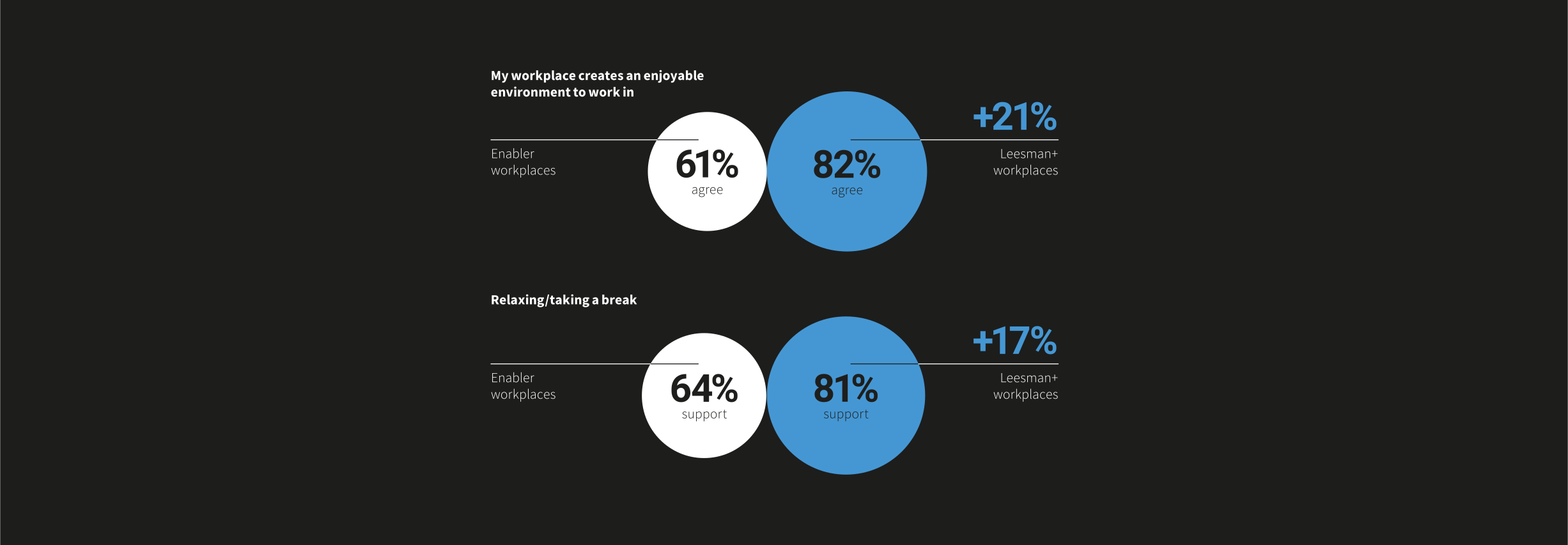
This is much more likely to happen in an outstanding workplace. In Leesman+ workplaces, 82% of employees considered their workplace as an enjoyable environment to work in, 21 points more than in the Enabler workplaces (61%).
Perhaps that’s because great workplaces are very good at creating a comfortable environment where employees can decompress and take a pause from work when needed. In Leesman+ workplaces, 81% of employees stated that ‘Relaxing/taking a break’ is supported, compared to only 64% in the Enabler workplaces.
Will a great workplace bring people back?
One of the key questions on organisations’ minds may be: will a great workplace help bring people back? Based on our research findings, the answer is: it may, or may not. We have found that decisions to use the office cannot be explained solely by the quality of the workplace. Many other factors matter, including (but not limited to) the ease of commute, how well home and other places support what employees do, and personal needs and circumstances. So maybe attendance isn’t the best indicator of success.
While an outstanding workplace may not necessarily make people be there more often, it enables them to have a much better experience when they are there. And what’s best, many of these positive effects carry over even when they are away.
Conclusions
The power of the outstanding workplace is that it superbly supports the experience of all its users, regardless of how often they visit. If you invest in a truly great workplace, these are the benefits you can expect to see in key areas:
1. Pride and image
Employees’ sense of pride in their workplace will be high. This is especially valuable at a time when shared organisational identity is under threat.
2. Privacy and concentration
Privacy and concentration are the cornerstones of knowledge work productivity, so having a workplace that supports them will magnify employees’ ability to work productively and help propel their organisations towards success. This is a crucial advantage in a world where many employees feel like home is the only place they can do focused work.
3. Community and working together
The ability to work together will improve and the sense of community among employees will become stronger. In a hybrid landscape where the social fabric of organisations is getting thinner, this is an invaluable advantage.
4. Enjoyable place to work
Employees will enjoy working there. This may be one of the biggest advantages that workplaces can offer to compete with the comforts of home.
The Power of Place research shows that the office continues to play a pivotal role for organisations in their efforts to reach their business outcomes. Its success is largely determined by how well it enables its users to be at their best and enjoy a seamless hybrid working experience.
1 Leesman office pre-pandemic N=387,414, Q1 2018 – Q4 2019 & post-pandemic N=305,713, Q3 2021 – Q2 2023.
2 Study sample: N=141,464, 515 workplaces with 50+ respondents, surveyed between Q3 2021 – Q2 2023. Enabler workplaces: N=117,263, 462 buildings; Leesman+ workplaces: N=24,201, 53 buildings.
3 Leesman+ certification criteria: Lmi 70.0 or above; 50+ respondents; Margin of error of 5.0 or below, at a 99% confidence level.

Read Power of Place
Our latest research uncovers the key features where outstanding workplaces bring critical business benefits in an aim to show how workplaces can go from average to outstanding.