March 2024
Abigail Townsend
- 4 minutes
March 2024
Abigail Townsend
Nearly a quarter of the entire UK population has a disability.
According to the Department for Work and Pensions’ most recent Family Resources Survey, 16m people had a disability in the 2021/22 financial year – 24% of the total population.
Sizeable progress has been made in recent decades when it comes to inclusion, and the Equality Act 2010 was introduced to ensure no one can be discriminated against for being disabled. But just a cursory glance at the statistics shows much can still be done.
Disabled people make up around 23% of the working age population. Yet the employment rate is 53.7% compared to 82.7% for people who are not disabled. The unemployment rate, meanwhile, is nearly double: 6.2% versus 3.4%.
When disabled people are in work, their experiences also vary enormously. Of the 42,000 respondents to Leesman’s Inclusive Workplace module, 19% identified as having a disability, long-term health condition, mental health difficulty or a neurodiverse profile. The 72% that answered ‘No’ had a Lmi of 68.5; the 19% had a Lmi of 60.0 (9% preferred not to say).
Inspired by our research, Leesman spoke to three disability advocates to discuss the main barriers to inclusion and what companies can do.
The diversity of disability
Disabled people are not an easily defined homogeneous group with identical needs and desires. Being disabled is defined as having a physical or mental health condition or illness that has lasted, or is expected to last, 12 or more months and which reduces your ability to carry out day-to-day activities.
For inclusion to work, this diversity needs to be acknowledged.
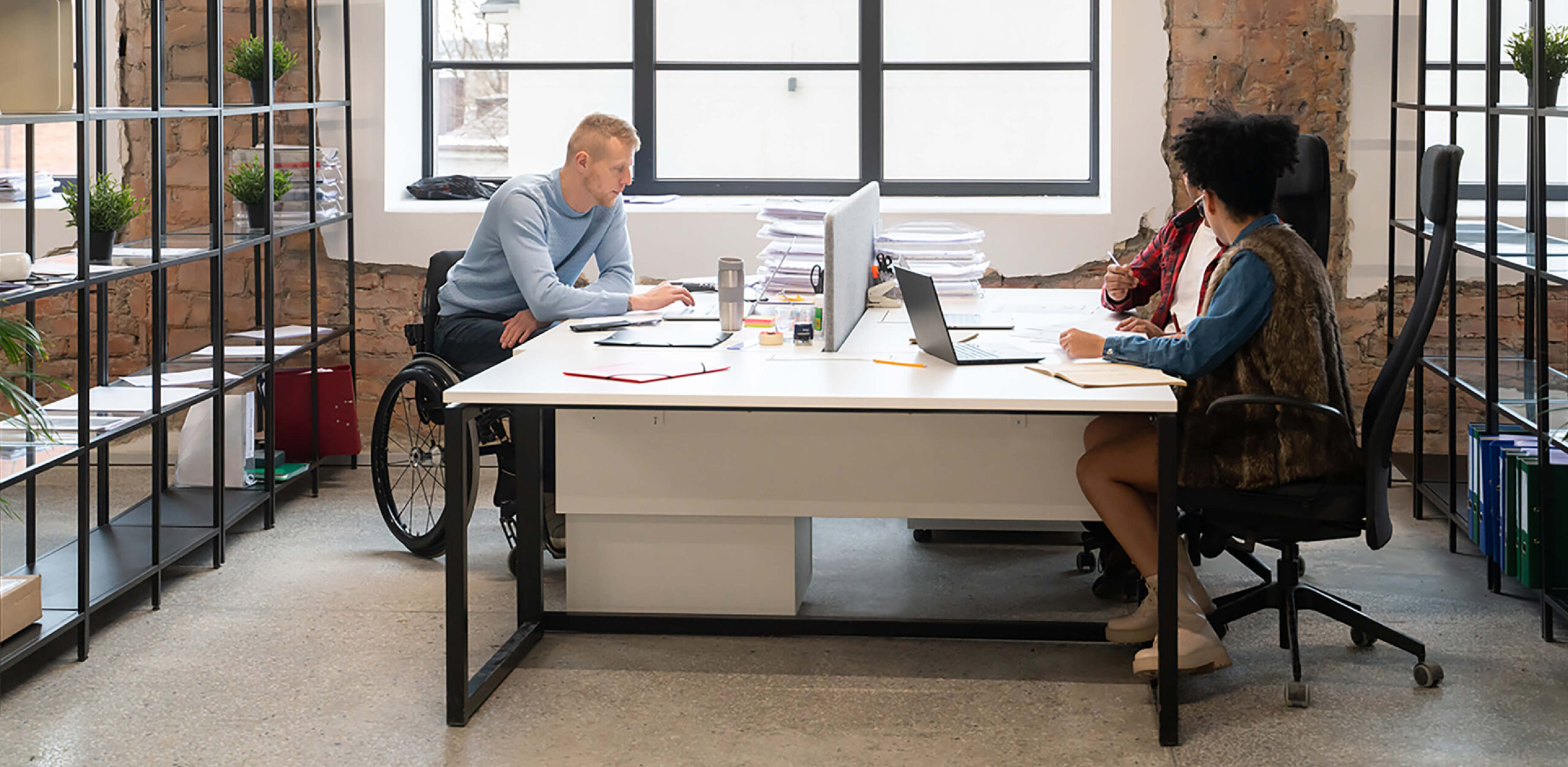
Husnara Begum is a former City lawyer turned consultant who draws on her own experiences as an Asian female wheelchair user when advising on diversity. “Back in the day disability was very much centred around visible, physical disability. Now it incorporates cognitive and health conditions that don’t impact your ability to move around but do require adjustments elsewhere.
“So that’s where the challenge lies for employers. How do you come up with any kind of policy or initiative that is going to reach everyone?”
Nick Goss agrees. Goss founded the Goss Consultancy in 2005 and advises companies across the private, public and third sectors on disability inclusion. “We talk about disability but really we’re all able and disabled in different ways,” he argues. “Roughly 65% of people who are covered by the legal definition wouldn’t even consider themselves disabled.”
The importance of culture
Establishing an internal culture that acknowledges not just disability, but its diversity is therefore vital, argues Begum. “We need to normalise disability.
“People with disabilities need openness and space to talk about their disabilities and how they impact them. And employers need to be more serious about creating an inclusive culture, whether that’s training people how to behave around disabilities or simply starting with language: what’s appropriate, what isn’t, how to show you’re an ally without coming across as patronising.”
Goss adds: “Diversity is a fact, but inclusion is an act. Inclusion is something we all need to work at.”
Remote working is not a panacea
For many disabled people, remote working can be life changing. But, Goss warns, in and of itself it is not a solution. “It has to be about choice and preference, rather than obligation. There are a lot of reasons why I might not want to work remotely for the rest of my life. I want to get out to places – and sometimes I want to get away from the family,” he says laughing. Luis Canto E Castro is a diversity and inclusion consultant at Mildon, which advises companies on disabled inclusivity.
He says, “For a bad employer, it’s a get out of jail free card.”
“They can shrug all responsibility apart from getting you a device: you stay at home, and we don’t have to worry about you participating in our workplace culture. It can be a very exclusionary and segregating experience.”
Assess, assess, assess
Organisations therefore need to continuously assess their approach to inclusivity, argues Castro.
“EDI [equality, diversity, and inclusion] is not a one-off initiative; it’s ever evolving. It’s a living, breathing organism that has to be nourished and assessed on an ongoing basis.
“We try and build that into the DNA of all everyday operations: do – assess, do – assess, do – assess.”
Under the Equality Act, employers and organisations must make reasonable adjustments to ensure disabled people can access jobs and services as easily as non-disabled people. But, says Castro: “It’s not enough. People use legislation as the standard, but who says it is the right standard?
“The Equality Act is outdated. Even the building code isn’t good enough. Look at disabled bathrooms: a small space suitable for wheelchairs and baby changing. How do I turn? I can’t because I’ll rip [the changer] off the wall.”
Disability will eventually affect everyone
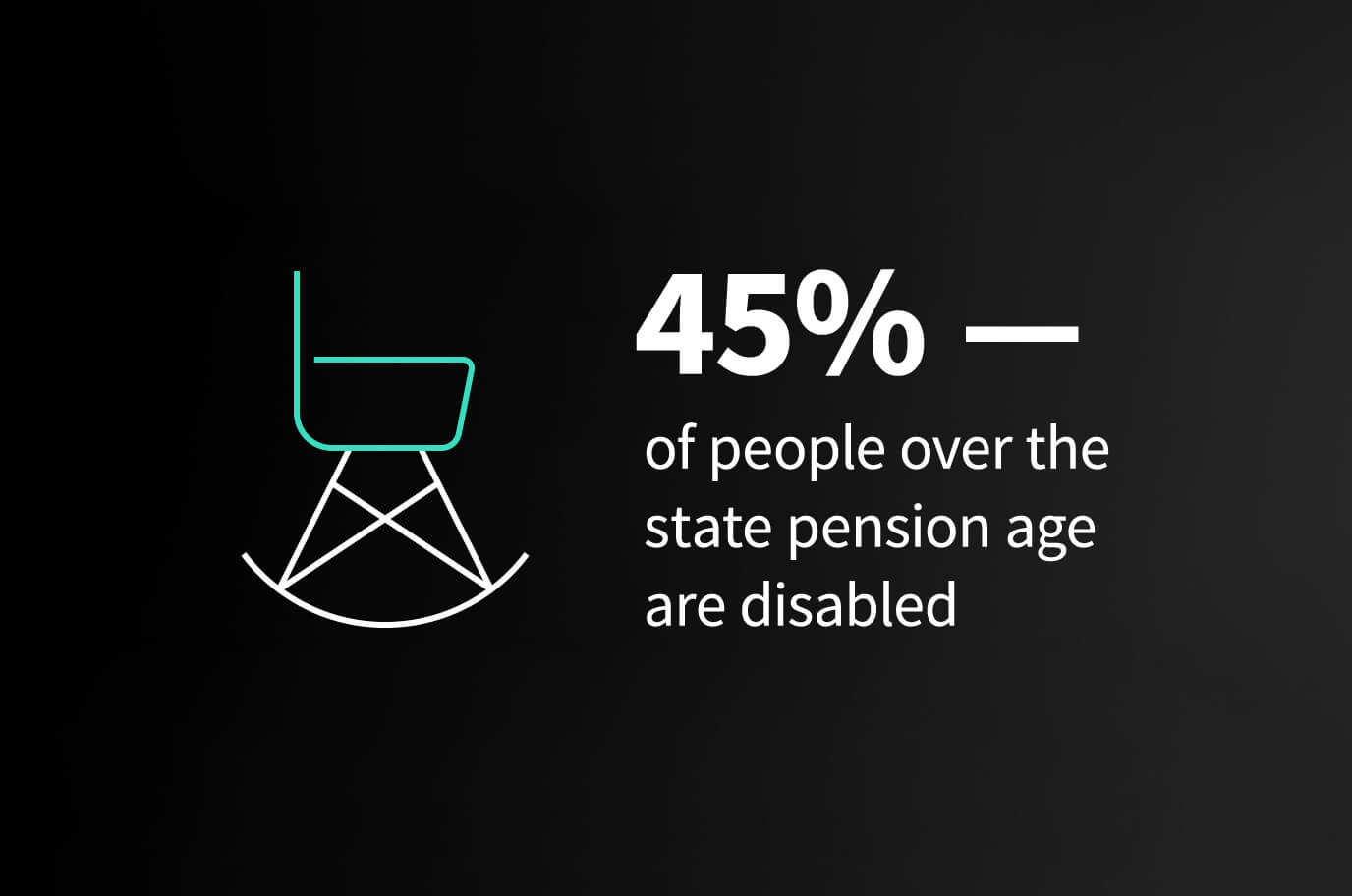
The prevalence of disability rises with age: 45% of people over the state pension age are disabled, as are a majority – 58% – aged 80 and over. Says Begum: “We will all experience disability at some point, either our own or that of an aging parent. And yet the infrastructure around us barely accommodates people with disabilities.”
As Goss adds with a cackle: “You’ve got a choice: die young or become disabled. Happy Monday!
“We need to recognise that it’s not only about how we get more disabled people into work. It’s about how to retain people once they become disabled.”
“We miss out on everything”
There is no one-size-fits-all approach to disabled inclusivity. It will vary from company to company, to service user to service user. But, warns Goss, without inclusion, companies risk losing staff, customers and, ultimately, the ability to grow. “And that is something no company can afford to lose.”
As Castro adds: “We miss out on everything. Innovation, growth, harmony, compassion, empathy. Every facet, every layer of the human fibre – that is what we’re losing out on.”